
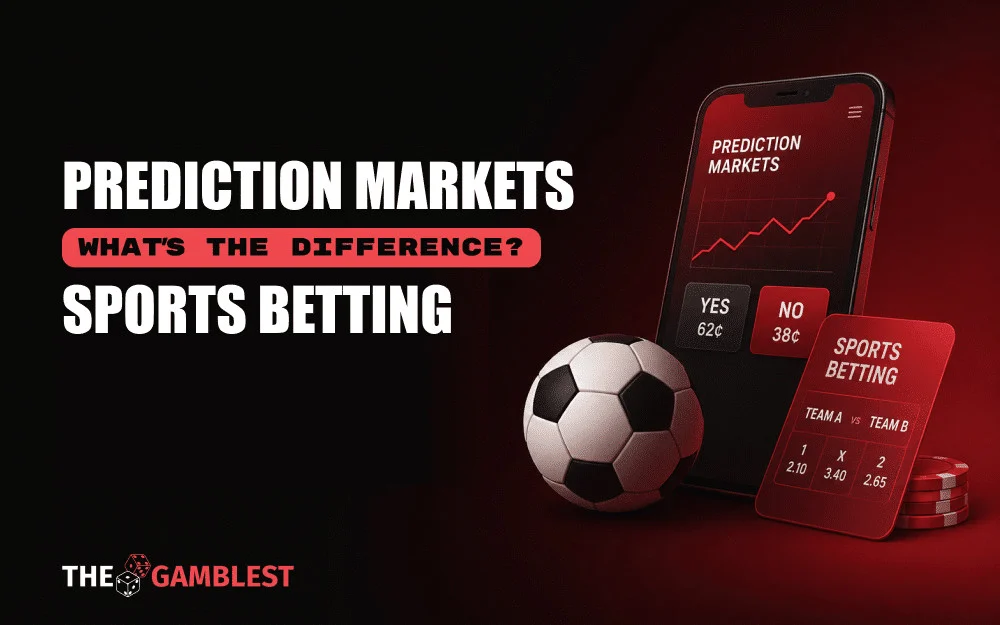
Betting on U.S. elections through online platforms like DraftKings or FanDuel is not permitted. However, prediction market platforms, such as Kalshi and Polymarket, have become accessible across all 50 states. The rise in prediction markets is evident, with over $44 billion traded in 2025 and a combined total of $24 billion for Kalshi and Polymarket by April 2026. While both prediction markets and sports betting may appear similar at first glance due to their operational similarities, significant differences exist. This guide explores the distinctions between the two.
**What is Sports Betting?**
Sports betting refers to the conventional method of wagering on live sporting events. Operators, or sportsbooks, set the odds, accept wagers, and pay out winnings directly from their pool of funds. Each bet made is essentially against the house; if the bettor wins, the sportsbook pays out, while losing bets result in the sportsbook keeping the stake. Odds are determined using statistical data and cash flow but do not necessarily reflect true probabilities. Furthermore, regulated markets limit betting topics primarily to sports events, steering clear of political or entertainment issues.
**What is a Prediction Market?**
Prediction markets, by contrast, serve as platforms for trading contracts predicting future event outcomes. Each contract is valued at $1 if the event occurs and $0 if it does not. Unlike sports betting, bets in prediction markets are not against a house; rather, users trade contracts with one another, with contract prices representing direct probability signals. Additionally, participants can exit trades before events conclude. These markets cover a broader array of topics, including politics, economics, and technology, alongside sports. In the U.S., Kalshi and Polymarket operate under regulations from the Commodity Futures Trading Commission (CFTC).
**Key Differences Between Prediction Markets and Sports Betting**
The two models may operate similarly, but several distinctions separate prediction markets from sports betting.
| Aspect | Prediction Markets | Sports Betting |
|———————|———————————————————-|——————————————————|
| Market Structure | Peer-to-peer, with users trading among themselves. | House-based, with every bet placed against the operator. |
| Pricing & Odds | Prices reflect true probabilities based on supply and demand. | Odds contain margins, leading to imprecise probability representations. |
| House Edge | None; platforms charge a transparent fee of about 1-2%.| Built-in disadvantages for bettors due to the vig. |
| Exit Flexibility | Users can sell positions at any time before the event concludes. | Bettors are locked in once a bet is placed. |
| Event Scope | Covers various topics including politics and economics. | Mostly limited to sports events. |
| Regulation in the U.S.| Operates federally under CFTC regulations, legal in all states. | State-specific licensing; legal in about 39 states. |
| Key Risks | Potential issues with liquidity and regulatory uncertainty.| Structural disadvantages due to the house model. |
**Pros and Cons of Prediction Markets and Sports Betting**
While they cater to different types of bettors, understanding the advantages and disadvantages of each model is crucial. Sports betting appeals to those who enjoy real-time action, while prediction markets offer trading-style betting on a variety of topics.
**Prediction Markets**
**Pros**:
– Transparent fees (1-2%)
– Ability to exit positions early
– A wide range of events
– CFTC regulation in the U.S.
– Pricing that reflects true probability
**Cons**:
– Low liquidity in niche markets
– Regulatory uncertainties
– Oracle risks on crypto platforms
– Complicated user experience
– Limited live betting options
**Sports Betting**
**Pros**:
– User-friendly experience
– Familiar markets across different sports
– Opportunities for live betting
– Welcome bonuses available
– Substantial liquidity
**Cons**:
– House edge of 4-10%
– Limitations for winning accounts
– Hidden margins affecting odds
– Legal restrictions in many regions
– Event scope limited to sports
**Choosing Between Prediction Markets and Sports Betting**
Deciding which model suits your betting preferences largely depends on your goals. Prediction market users often focus on probabilities rather than simply winning or losing a bet. For instance, a participant might evaluate whether inflation will rise by 3% this year. Platforms like Kalshi and Polymarket stand out, but other options are emerging as prediction markets integrate into apps like Telegram or launch new features. In contrast, sports betting remains confined to a few popular sports such as football, basketball, and tennis, primarily operated by sites like Bet365, DraftKings, and FanDuel.
To summarize, choose prediction markets for factors like politics, economics, or the desire for early exits, and opt for sports betting if you prefer live game betting and promotional offers linked to sporting events.
**Legality and Regulation Overview**
In the UK, sports betting has been legal for over a century, supervised by the UK Gambling Commission (UKGC). Many European nations enforce strict betting regulations; for example, Germany restricts monthly bets to €1,000. In the U.S., 39 states permit sports betting, but significant states like California, Texas, and Georgia do not have accessible sportsbooks.
In contrast, prediction markets in the U.S. operate within a CFTC framework, permitting bets in all 50 states. However, many EU countries have restricted access to certain prediction market sites, and analysts indicate these platforms may fall under betting intermediary categories. Regulatory efforts are underway in Ireland, aiming to align with the UK regarding remote betting intermediary licenses.
**FAQs about Prediction Markets vs. Sports Betting**
**Are prediction markets considered gambling?**
The classification of prediction markets varies by jurisdiction. In the U.S., they are viewed as financial derivatives under the CFTC and not classified as gambling. In contrast, most European regulators identify these markets as gambling products, requiring licenses. This classification influences where prediction markets can operate and how they are taxed.
**What is the difference between prediction markets and sports betting?**
Prediction markets facilitate buying and selling contracts based on multiple event outcomes, while sports betting involves placing wagers with a bookmaker at fixed odds on a particular sport.
**Are prediction markets better than sports betting odds for predicting an outcome?**
Yes, prediction markets aggregate information from various investors, leading to prices that often reflect true probabilities, especially for non-sporting events. Research suggests they outperform traditional forecasting methods in political and macroeconomic predictions. Sportsbooks, conversely, may lack expertise in many non-sporting areas, limiting their predictive accuracy.
**Can people bet on sports through prediction markets?**
Yes, prediction market platforms provide options to wager on sports events, typically offering 'yes' or 'no' options for specific outcomes.

