
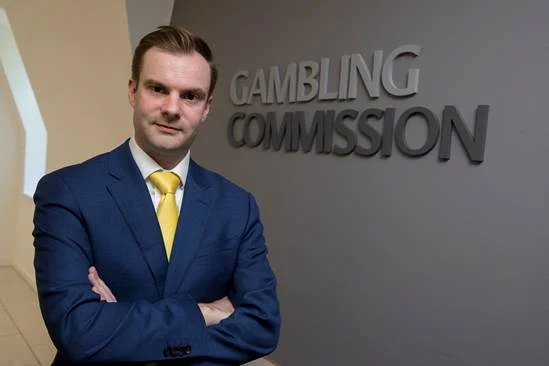
Tim Miller has concluded his decade-long tenure at the UK Gambling Commission, where he played a pivotal role in implementing the 2023 white paper reforms, which encompassed areas such as age verification, game design, marketing regulations, and financial risk assessments. Additionally, he oversaw the launch of the Gambling Survey for Great Britain (GSGB).
Among his achievements, Miller highlights the National Strategy to Reduce Gambling Harms, which successfully integrated the financial services sector into efforts aimed at preventing gambling-related harm. This initiative also encouraged challenger banks, including Starling, to adopt gambling block features.
In June, Miller announced his departure, which became official last month. He has since established GamReg Consulting, securing initial clients such as Gaming Compliance International (GCI) and Spectrum Gaming Group. He described the feedback since launching his consultancy, particularly from attendees at G2E in Las Vegas, as "absolutely fantastic."
Miller’s exit from the Commission coincided with a period of uncertainty; Chief Executive Andrew Rhodes had stepped down just prior in April, financial risk assessments were confirmed in July, and implementation is ongoing.
Miller firmly stated that his departure was not a reaction to the Commission’s direction, emphasizing, "I wasn’t looking to escape the Commission, I was just ready for the next challenge." Although his name circulated as a potential successor to Rhodes, he never entertained the idea, insisting, "If you’re going to do that job, you need to be willing to commit for at least three years or more, and I’d been clear for some time that that wasn’t what I wanted to do." He also downplayed the significance of recent leadership changes, pointing out that the Commission is staffed by over 300 individuals.
Miller identified the illegal gambling market as the Commission’s foremost challenge and criticized the notion that a single regulator could address this issue alone. He likened illegal gambling to organized crime sectors, such as drug trafficking, noting that it would be unrealistic to expect a small regulator based in Birmingham to tackle such a complex problem independently. He called for cooperation among law enforcement, governments, and tech companies to combat illegal gambling effectively, stating, "If people think a gambling regulator will defeat the illegal market by itself, we're destined to fail."
In defending the GSGB, Miller addressed criticisms from industry sectors claiming it exaggerated gambling participation and harm. He remarked that those critics have largely ignored the limitations of other surveys, such as the Health Survey for England, which they favor. He asserted that any assertion of having a conclusive measure of gambling impact is misleading.
The financial risk assessments (FRAs) have faced the most backlash from the industry. Miller explained that their branding contributed to misunderstanding; they were labeled as affordability checks, which he stated are fundamentally different. He expressed his own skepticism regarding affordability checks, commenting, "For one thing, I think they’d be quite difficult to achieve."
He elaborated that initial pilot studies pinpointed a specific group at risk for significant harm who were not identified by existing methods, often comprised of high-revenue customers. He believes that implementing these checks could reduce the documentation burden on consumers, leading to a more efficient regulatory process. "If a tool can both help identify consumers who are potentially at risk of harm and remove burdens and friction for the vast majority of consumers, that feels like a win-win to me," he stated.
Miller also refuted claims that the Gambling Commission board postponed its decision regarding FRAs, describing such characterizations as "inaccurate." The early stages of FRAs are designed to apply only to larger operators and customers with significant net deposits, with no enforcement at first.
Regarding the potential for high-value customers to migrate to unregulated markets due to these checks, Miller acknowledged the risk but remarked that such displacement can be overstated, recognizing that operators’ own actions can also drive customers away from licensed platforms.
His former colleague Andrew Rhodes’ transition to a consultant role at Hawkbridge raised questions about possible conflicts of interest. In response, Miller firmly rejected any suggestions that his new consulting role would compromise his independence, stating, "No, not at all. I was very clear that I didn’t want to move into roles that would compromise my independence." While acknowledging the confidentiality of some information he accessed while at the Commission, he maintained that his expertise is his own and critical to his work.
As he moves forward, Miller plans to focus on three primary objectives: sharing insights with emerging jurisdictions—particularly in the U.S., challenging tech platforms like Meta over illegal gambling advertisements, and facilitating better communication between developers and regulators. He reflected on previous experiences with vendor presentations filled with jargon, emphasizing the need for clearer dialogue.
Miller’s decision to work outside the UK stems from a desire to distance himself from what he describes as a "really toxic" debate within the gambling industry, where personal attacks have become common. He shared that threats against his family had occurred, highlighting the unacceptable nature of such behavior. His final wish for the sector is to maintain passion while learning to collaborate with those holding opposing views.

