
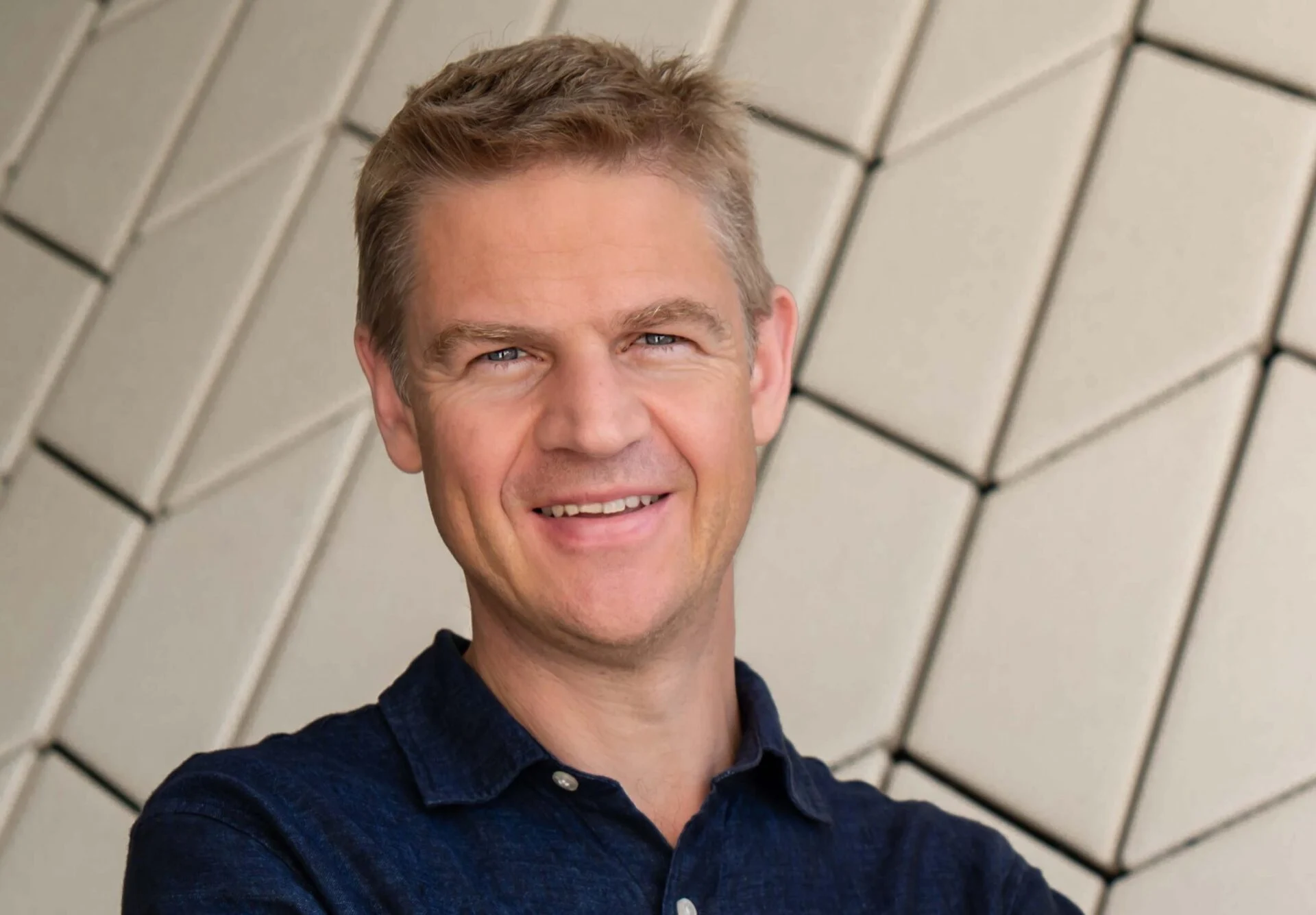
The gambling industry often succumbs to challenges like over-regulation, litigation, or simple exhaustion, rarely by choice. Yet, on July 31, Nigel Eccles, who co-founded FanDuel, will close BetHog, the crypto casino he launched with several former colleagues from FanDuel. This decision comes while the business remains operational, thriving, and, as Eccles describes it, offering an excellent product.
The closure of BetHog is not due to failure but a strategic pivot. All of the resources accumulated at BetHog—its engineers, technology, and insights—are being redirected to Sentient Studios. This new venture is dedicated to developing a cutting-edge photorealistic AI dealer—an avatar that deals real-time blackjack without the need for a physical studio, shift schedules, or any human presence. According to Eccles, this presents the most significant opportunity in his 25-year journey within the gambling sector.
"We ran the risk that if we didn’t put 100% behind it, we’d fail at AI live dealer—the one thing we were really excited about," he told iGB.
Eccles and his team’s progression to this pivotal realization provides insight into the future direction of online casinos.
The initial disappointment with BetHog made the decision easier. BetHog was founded with the belief—articulated by Eccles and his long-time collaborator Rob Jones—that a superior product would dominate the crypto gambling space. However, they discovered that the crypto-casino landscape heavily prioritizes marketing over product quality. "I think we built a really great product," remarked Eccles, but acknowledged that the competition largely revolved around streamer deals and bonuses. Winning a market share would have been modest; while a niche in crypto casinos could be possible, Eccles identifies this sector as comprising less than 10% of online gambling.
This recognition of market dynamics refocused efforts toward Sentient Studios, particularly after they began piloting an AI dealer on BetHog. The results were surprising—oftentimes, live dealer games cater to high-stakes players, who are few but wager substantial amounts. In contrast, Eccles noticed that the AI tables attracted a broader audience, drawing in lower-stakes players who engaged with the game more casually, similar to original slots that appeal to the mass market.
Player interviews revealed an intriguing insight: many newcomers find human dealers intimidating. Eccles himself, a seasoned blackjack player, noted that new players often feel unsure, saying, "I don’t really know what I’m doing." This led to an innovative interface where players could ask the AI dealer for advice on their next move, prompting BetHog to integrate this as a feature.
In April, discussions with various operators, including crypto and globally regulated casinos, illuminated further opportunities. Many traditional operators expressed frustration with the live dealer model, noting that some jurisdictions ban it entirely, while others impose strict conditions like requiring physical casino broadcasts.
The rigidity of live casino development posed additional challenges. To rebrand a live studio for a flagship sports partnership typically requires three to six months at substantial cost. In contrast, Eccles believes Sentient Studios can meet those demands in as little as one to two weeks, allowing operators to change dealer appearances, personalities, and various other attributes flexibly. They can scale capacity easily, whether they require just a single table or thousands in peak hours.
As operators expressed enthusiasm, several tier-one licensees are expected to launch AI-dealer offerings later this year. Eventually, running two companies simultaneously became impractical, leading the 15-member engineering team based in Britain to transition mainly to focusing on the AI live dealer project. "Gradually everybody moved over to AI live dealer because that was the exciting thing to be working on," Eccles recounted, remarking on the clarity of the decision once it was contemplated.
Developing the virtual dealer posed its own challenges. Creating photorealistic and responsive video is not straightforward. While generating visually stunning videos can be quick, ensuring rapid responsiveness is more difficult, as Eccles explained. Each player interaction requires the avatar to react immediately, demonstrating appropriate emotions while coordinating movements in real-time.
Initially, the product had exaggerated expressions, and to enhance realism, the team released a cartoon-like version before transitioning to photorealism by April. Regular updates have been implemented to refine characters further, reflecting the continuous advancement in technology. "Trillions of dollars have been invested in these base models," he noted, highlighting the rapid improvements observed from eight months ago to now.
As the competition grows, a pertinent question arises: what prevents established players like Evolution, a leader in live casino services, from replicating Sentient's innovations? While Eccles anticipates competition, he suggests that established companies might struggle with what is known as an innovator’s dilemma, similar to De Beers's journey with lab-grown diamonds.
Eccles claims that Evolution has historically dismissed AI live dealers as mere deepfakes, but to embrace AI would threaten their existing product lines. He forecasts that, within five years, as much as 80% of live dealer offerings could feature AI-driven avatars.
Concerns regarding authenticity and trust are expected to arise. While some may question the authenticity of AI live dealers, Eccles argues that the perceived sociability of human-dealt games is often misleading. He points out that online tables frequently lack interaction, saying, "90% of the time you’ll see absolutely zero communication" in public gaming sessions.
Regarding trust, Eccles addressed the evolution of online gaming. He emphasized that many players engage with virtual content without fully understanding the underlying technology, highlighting that trust can be built in various ways beyond physical cards.
Sentient’s dealer aims to bolster trust through improved production values and regulatory compliance. The system, at its core, operates similarly to random number generator (RNG) products, assuring fair play and trained responsible gambling protocols. For instance, if the dealer recognizes a player has exhausted available funds, it can issue a warning.
Eccles dismissed notions that the shift to AI was prompted by regulatory pressures on BetHog. He maintains that the closure is primarily an opportunity, not a reaction to regulation. The company consciously avoided problematic markets and was already pursuing regulated licensing before the transition. He assures that any remaining player balances will be honored.
Eccles also clarified that his ongoing legal dispute with FanDuel’s former board does not impact the operations of Sentient Studios.
Interestingly, Sentient now faces a new challenge: being overly excellent. The problem revolves around audio quality, where live dealers often struggle with poor sound due to background noise, while Sentient’s product boasts clear audio quality. Eccles notes that this disparity can disrupt the illusion of authenticity, necessitating adjustments to make the sound feel more organic.
Despite fears of automation replacing human roles, Eccles compares the phenomenon to previous public anxieties regarding ATMs or self-checkout systems. "People say, ‘I want it to stay traditional’—and then it all just kind of moves," he explained, predicting that players who once resisted the idea of gambling with an avatar might soon embrace it.

