
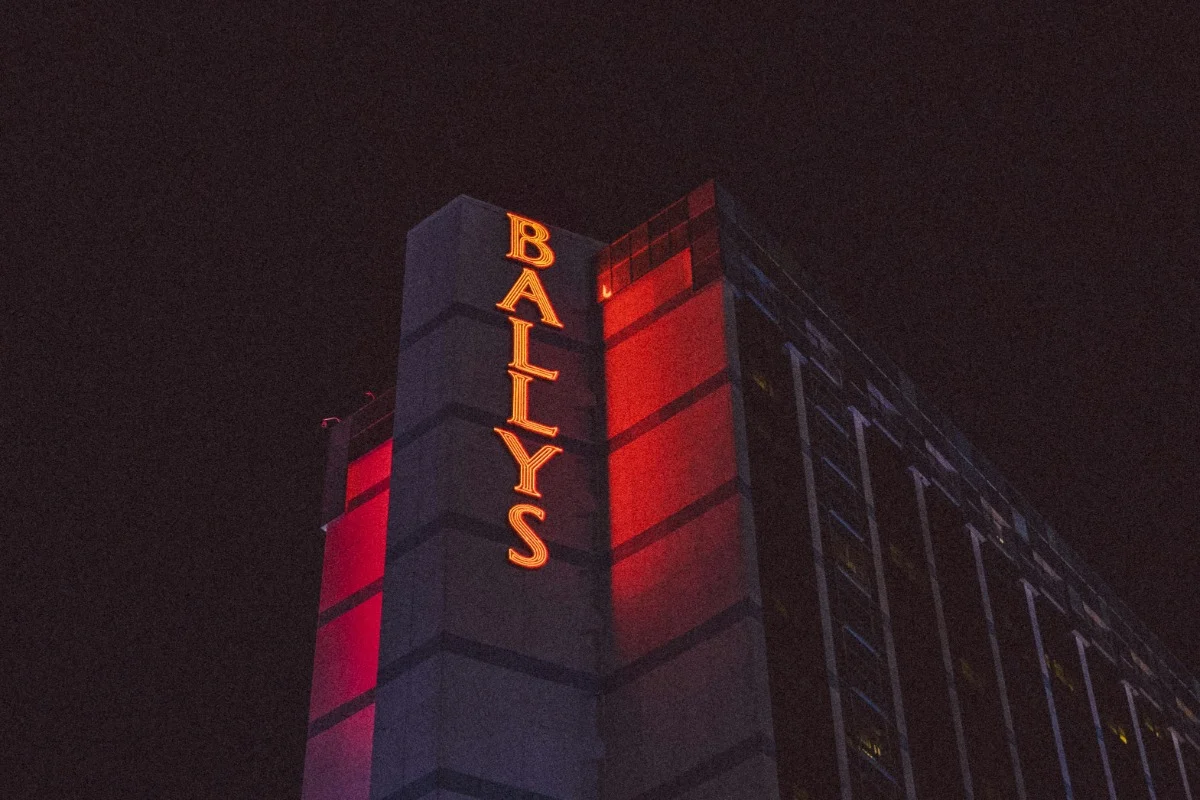
Bally’s Corp has faced considerable challenges this summer, grappling with pressures on its Chicago and Las Vegas projects, alongside the impending timelines for its New York resort. In Chicago, the company managed to secure an extension for its temporary license just before the state legislature's adjournment on June 1. This extension comes as construction on its $1.8 billion permanent casino is underway. However, a new concern has surfaced regarding video gaming terminals (VGTs) within the city limits, which could pose a significant threat to Bally’s operations.
Chicago Mayor Brandon Johnson encountered a difficult budget process last year, culminating in a city council-approved budget that lifted the ban on VGTs. This budget anticipates $6.8 million in licensing revenue from VGTs, which relies on approximately 80% of eligible liquor licensees applying for the terminals. Recent reports indicate nearly 300 venues have already sought to operate these machines.
Discussions surrounding this issue remain contentious, as evidenced by a recent city council committee meeting that ended without resolution after tensions flared. During the meeting, Bally’s proposed to establish slot lounges at O’Hare and Midway airports, claiming this could cover the anticipated $6.8 million in VGT licensing revenue. Christopher Jewett, Bally’s senior vice president of corporate development, stated, “We believe one lounge can generate approximately $5 million in actual gaming and admission taxes, which go directly to the city. This alone can replace the revenue in question.”
Bally's has cautioned that if the VGT ban is not reinstated, the financial repercussions could be severe. The company projects that city-wide VGTs could decrease its annual revenue by nearly $75 million and potentially eliminate around 1,000 jobs connected to its temporary and permanent casinos. In securing the exclusive Chicago license, Bally’s entered into a host community agreement that includes a $4 million yearly payment to the city. The introduction of VGTs could potentially nullify these agreements and lead to legal disputes.
Nevertheless, the potential revenue from Chicago's VGTs is substantial. As of this year, Illinois casinos reported $889.5 million in adjusted gross receipts and $53.6 million in local taxes, while VGTs achieved $1.4 billion in net terminal income and $68.5 million in local taxes. Up until this budget cycle, Chicago was a notable holdout among the 1,100 municipalities in Illinois that have adopted VGTs.
Jewett remarked to the council, “Had we known that, within just a few years, this body would reverse course and allow an alternative form of gambling that breaches the agreement, we would never agree to the numerous commitments, all of which we’ve held up.” Currently, only two U.S. airports—both in Nevada—feature slot machines: Harry Reid International Airport in Las Vegas and Reno-Tahoe International Airport in Reno, generating nearly $40 million and about $1 million annually, respectively.
In Las Vegas, Bally’s is under scrutiny for its $1.2 billion mixed-use development on the Strip, especially as construction progresses on a neighboring stadium for the Athletics, which is set to open in spring 2028. While the stadium’s timeline appears stable, uncertainty looms over the future of Bally’s development. Reports suggest that if Bally’s cannot expedite its project, the Athletics may need to construct necessary infrastructure, potentially increasing expenses by $100 million.
Steve Hill, president and CEO of the Las Vegas Convention and Visitors Authority, indicated that Bally’s does not appear to have sufficient financing for the project. The LVCVA has requested that Bally’s provide a future plan by August. Bally’s commented that it is “unlikely” the casino will be ready for 2028, reiterating this sentiment recently. On Thursday, Bally’s CFO Mira Mircheva and attorney Dan Reaser clarified to the Nevada Gaming Commission that the 2028 timeline applies solely to the stadium's opening. They clarified that the hotel and casino may not be completed by that date, likely resulting in only the retail and entertainment sections being ready.
As these local pressures mount, a significant project looms ahead for Bally’s. Last winter, the company secured a sought-after downstate New York casino license and plans to construct an integrated resort at a golf course it owns in the Bronx. This project carries a price tag of $4 billion, comparable to the combined costs of the Chicago and Las Vegas ventures. Though many of the application materials for Bally’s Bronx remain redacted, a timeline indicates that construction would commence about eight to nine months post-licensure. Given that licenses were awarded in December, construction could potentially start around August or September. Bally’s expressed in February its eagerness to move forward with the New York project as early as this fall.
Bally’s has been notably active in the gaming industry, expanding and reallocating resources creatively in recent years. In addition to its three major U.S. projects, the company has acquired Intralot, Evoke, and a majority stake in Star Entertainment since the beginning of 2025. As it concluded the first quarter with $559 million in cash against long-term net debt exceeding $4.3 billion and $2.2 billion in lease liabilities, Bally’s stock has risen around 50% over the past year due to asset accumulation, though it has declined 15% in the last six months.

