
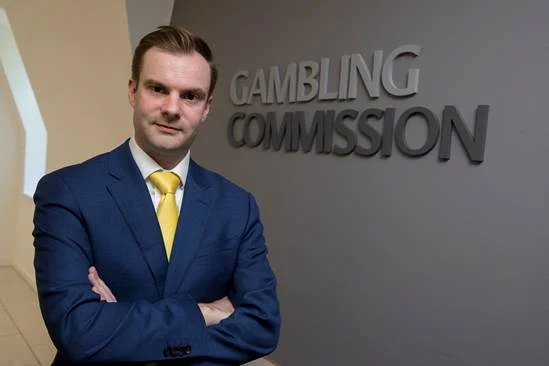
Tim Miller, who dedicated a decade to the UK’s Gambling Commission, was instrumental in implementing the comprehensive reforms outlined in the 2023 white paper. These reforms encompassed crucial areas like age verification, game design, marketing regulations, and financial risk assessments. Additionally, Miller oversaw the introduction of the Gambling Survey for Great Britain (GSGB).
One of Miller's key achievements is the establishment of the National Strategy to Reduce Gambling Harms. This initiative notably involved engaging the financial services sector to assist in harm prevention, prompting challenger banks like Starling to adopt gambling blocks for their services.
After announcing his departure in June, Miller completed his tenure last month and has since launched GamReg Consulting. His initial clients include Gaming Compliance International (GCI), a provider of transaction and market monitoring tools for regulators, and Spectrum Gaming Group. Miller reports that feedback since his launch, particularly from the recent G2E in Las Vegas, has been overwhelmingly positive.
Miller's exit came at a critical juncture for the Gambling Commission, which was undergoing significant changes. Andrew Rhodes, the agency's chief executive, stepped down in late April, while financial risk assessments were confirmed in July, with full implementation still on the horizon.
Miller emphasizes that his departure was not a reaction to the Commission’s current direction, stating, "I wasn’t looking to escape the Commission, I was just ready for the next challenge." Despite being mentioned as a potential successor to Rhodes, he did not pursue that path, noting that such a role requires a long-term commitment, which he had already decided against.
Addressing the recent wave of senior departures at the Commission, Miller believes the timing is coincidental. He stresses that while individual leaders play vital roles, they are not more important than the organization as a whole, which consists of over 300 staff members.
Miller identifies the illegal gambling market as the Commission's most pressing challenge, criticizing expectations of what a regulatory body can achieve independently. He compares illegal gambling to organized crime networks, such as the drug trade, asserting, "No one would expect a fairly small regulator in Birmingham to be responsible for cracking that by itself." He argues that law enforcement, governmental bodies, and technology firms must also contribute to tackling illegal gambling, stating, "If people think a gambling regulator will defeat the illegal market by itself, we’re destined to fail."
He defends the GSGB against industry criticism a few have made for allegedly overstating gambling participation and harm. He points out that some critics have disregarded the shortcomings of the Health Survey for England, which they prefer for its lower reported issues surrounding gambling, despite it indicating a rising problem gambling rate. "If anybody suggests there’s a single survey or a single piece of data that gives you the absolute definitive picture on an issue, then frankly, they’re kidding you," Miller asserts.
Financial risk assessments (FRAs) generated significant pushback from the industry, attributed partly to naming conventions. Miller clarifies that critics labeled them as affordability checks, a misunderstanding since FRAs serve a different purpose. He himself disagrees with affordability checks, believing they would be challenging to implement.
Miller explains that the initial pilot of FRAs revealed a group of at-risk individuals not captured by existing methods, who often contribute considerable revenue. Once identified, it is crucial to address their risk, which could have financial implications. He believes that with proper implementation, FRAs can lessen the need for consumers to share extensive documentation with operators. "I’m convinced that if financial risk checks are implemented by industry in the right way… there should be much less cause for consumers to share documents with operators," he expressed.
He dismisses claims that the Gambling Commission board delayed decisions regarding the approval of FRAs as inaccurate. The initial phase applies solely to the largest operators and clients making net deposits exceeding £5,000 within a rolling 24 hours, or £2,500 for those under 25. Enforcement will not begin in the early stages of implementation. Future thresholds are set at £1,000 in a 24-hour timeframe or £3,000 over 90 days.
When questioned about the practical effects of the checks under these stipulations, Miller refrains from conjecture. He frames discussions about future thresholds around proportionality, adding, "Where you see evidence of risk coming down, regulatory burdens can come down with it."
He acknowledges the concern of premium customers moving to offshore sites as FRAs are fully rolled out. Miller points out, “There is always a risk of displacement from regulatory requirements. Sometimes that risk is overblown, but it has to be monitored.” However, he highlights that operators’ own commercial choices often drive players to unlicensed platforms. He recounts feedback from successful customers who struggled to place bets and felt they only had the option to turn to illegal markets due to operator restrictions.
The appointment of Andrew Rhodes as principal consultant at Hawkbridge, an advisory firm, has raised concerns about potential conflicts of interest. Miller, now working with a company that provides monitoring tools to regulators, firmly denies any similar issues for himself. "No, not at all. I was very clear that I didn’t want to move into roles that would compromise my independence," he states.
While he acknowledges that he retains access to confidential information from his time at the Commission, he insists that his expertise remains uniquely his: “I don’t think there’s any industry where you can say somebody can’t make use of the skills they’ve built up.”
Miller’s focus will initially be outside the UK, as he aims to avoid lingering in the scene he calls "toxic" at times, filled with personal attacks from both industry and activists. He recalls receiving threats against his family through social media and calls such behavior unacceptable. His parting message to the sector was clear: "Keep your passion, but find a way to work with people who have different views."
His new consulting priorities include sharing regulatory insights with emerging jurisdictions, pressuring technology platforms like Meta to curb illegal gambling advertising, and fostering communication between developers and regulators. He recalls numerous vendor presentations rife with jargon that left him confused and aims to bridge that communication gap.

