
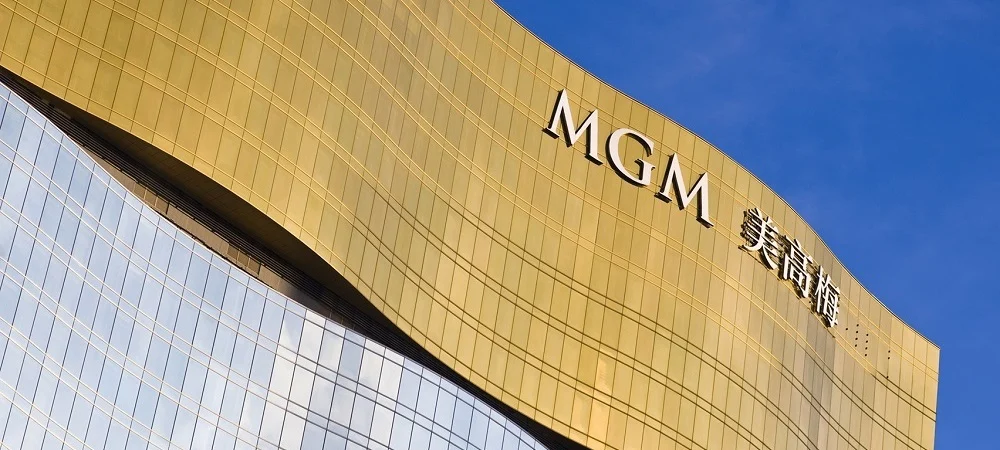
MGM Resorts International announced its second-quarter financial results on Wednesday, showcasing record revenues while contending with questions surrounding a potential acquisition offer from Barry Diller's People Inc. Diller made an offer of $48.30 per share on June 1, shortly after Caesars Entertainment was acquired by Fertitta Entertainment. CEO Bill Hornbuckle reported that an independent committee is currently assessing the takeover proposal but refrained from providing further details during the earnings call.
In terms of financial performance, MGM recorded group revenue of $4.5 billion in Q2, marking a 1% year-over-year increase. Adjusted EBITDA for the quarter was $610 million, reflecting a 6% decline from the previous year. However, net income soared to $292 million, compared to $49 million this time last year. As of the end of the quarter, MGM held $2.5 billion in cash against long-term debts of $6 billion.
In Las Vegas specifically, revenues reached $2.2 billion, and adjusted EBITDA rose to $735 million, both showing 3% improvements over the past year. Still, investors expressed concerns about the overall health of the Las Vegas market, particularly in regards to lower-end customer segments. COO Ayesha Molino acknowledged the challenges facing properties like Luxor and Excalibur, but emphasized that luxury segments remain strong. To address issues in the low-end market, MGM has implemented all-inclusive packages at these properties which have reportedly been well received.
To illustrate the evolving cost pressures in Las Vegas, Hornbuckle reiterated a recent incident involving a $26 bottle of water at the Aria casino, which attracted significant outrage and media attention. He affirmed that the new all-inclusive promotions, with 30,000 room nights booked so far, were designed to counter negative perceptions around pricing in the city.
MGM’s casino revenue in Las Vegas surged by 17% year-over-year to $536 million, with slot and table hold rates outperforming the average reported across the Strip. On the regional level, while same-store quarterly revenue was a record $904 million, net revenue did slightly decrease by 4% year-over-year to $924 million, accounting for a 9% dip in segment-adjusted EBITDAR which totaled $280 million.
Earlier this year, MGM concluded the sale of Northfield Park in Ohio for $546 million, marking a strategic exit from that market. Looking ahead to renovations, Hornbuckle confirmed plans to upgrade the Borgata casino in Atlantic City and the Beau Rivage in Mississippi later this year.
Additionally, updates were given regarding the Sphere Entertainment venue being constructed outside Washington, D.C., which is positioned as a significant draw for MGM National Harbor. Meanwhile, in Macau, MGM China reported flat revenue at $1.1 billion with a 15% decline in adjusted EBITDAR, partly due to the recent FIFA World Cup.
In the digital segment, MGM Digital's revenues rose 20% year-over-year to $196 million, but the adjusted EBITDAR loss increased from $26 million to $31 million. BetMGM, MGM’s joint venture with Entain, posted $711 million in revenue, up 3% from the previous year, bolstered by a rise in iGaming revenue.
Though adjusted earnings per share were reported at $0.59—below analyst expectations of $0.63—analyst reactions remained positive, contributing to a stable stock price close of $45.66 on Thursday. Over the past year, MGM shares have increased approximately 22%, and the company has repurchased 4 million shares valued at about $164 million this quarter.
Macquarie and Truist analysts both provided optimistic outlooks, maintaining outperform ratings and adjusting target prices upward, emphasizing the strength of MGM’s Las Vegas presence and improving trends in Macau while highlighting solid regional performance.

