
California's SB 549 proposes a significant shift in the legal landscape for tribes, granting them a one-time opportunity to file a lawsuit against cardrooms. Supported by tribes competing against these establishments, the bill passed its second reading in the state house on August 20. A previous version successfully passed the senate in May 2023 but has been modified since then. If the house version passes, it will return to the senate for consideration before the general assembly adjourns on Saturday, leaving only four days for the bill's progress through both chambers.
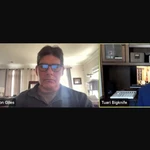
Tuari Bigknife, attorney-general for the Viejas Band of Kumeyaay Indians, emphasized that the bill aims to affirm rights granted to tribes by the state. For over a decade, Indian Country has sought to secure these rights through the attorney-general's office and the California Gambling Control Commission (CGCC), yet progress has stalled repeatedly. Bigknife remarked during the "New Normal" webinar on August 28 that despite various meetings and recommendations, tangible action has been lacking.
"We have been kicked out of court with the crazy idea that tribes have these rights but do not have the ability to go to court to defend these rights," he stated.
The central concern revolves around the operation of player-banked games, like blackjack and baccarat, in California's cardrooms. State law permits only house-banked card games in tribal casinos. Cardrooms can offer these games but must do so as player-banked, where players alternate as the bank. However, since 2007, many cardrooms have utilized third-party providers to assume the banking role.
Cardroom representatives fear that if the new requirements are enforced, it could lead to their financial ruin. The situation has gained considerable political traction, with intensive protests, speeches, and lobbying in Sacramento coinciding with the bill's advancement. Cardrooms have reportedly spent millions fighting against this legislation.
Keith Sharp, general counsel for the cardrooms, conveyed their situation, stating, "If you’re going to attack us and try to take away what we’ve had for decades, then we’ve got to fight back. So we’re going to spend the money that we need to spend. I mean it’s about survival at this point."
Bigknife, however, dismissed the cardrooms' claims as dramatic. "We’re not moved by the fact that they are not going out there to innovate or find ways to make revenue," he said. He pointed out that while cardrooms have operated for over a century, they have only engaged in what he termed illegal gaming since 2007. Thus, he argues there is no justification for them not returning to pre-2007 practices instead of exploiting tribes economically.
The COVID-19 pandemic provided a unique opportunity for California tribes. With state-governed cardrooms closed for over a year during the shutdowns, many tribal casinos were able to open, albeit under restrictions. Bigknife indicated that during this period, tribal revenue increased. He cited evidence showing that player-banked cardroom games have been costing Indian Country at least $100 million annually.
The push for the legislation enabling a lawsuit is not unprecedented. Similar language appeared in Proposition 26, which aimed at legalizing retail sports betting but failed due to conflicts between commercial operators and tribal interests. The next time tribes propose a gambling initiative, it is likely they will prefer a more straightforward approach without entanglements.
There exists a complex relationship between the current issues facing cardrooms and the prospect of legal sports betting. While tribal casinos typically operate independently, the CGCC regulates cardrooms and collects specific fees from the tribes. During the webinar, both host Victor Rocha and Bigknife raised concerns, questioning how California could manage sports betting effectively when unable to regulate cardrooms adequately and combat money laundering.
If SB 549 fails to pass, Bigknife stated that tribes would persistently return to the legislature, and he did not rule out going directly to voters.
Achieving consensus within California's Indian Country poses another challenge. The tribes encompass a diverse network of reservations, each with its own culture, economics, and sizes. Bigknife noted that securing agreement among a significant number of tribes for SB 549 has proven politically complex. This fragmentation has also hindered progress on other initiatives, such as legal sports betting.
"Probably most surprising part for me, personally, has been the civics lesson in California politics," Bigknife commented. He acknowledged the intricacies involved in strategy and timing, as well as unexpected obstacles. "If a few tribes are asking for something, even if it is 100% the right thing, it seems like we have to get all the tribes together. We did a lot of work… the legislature wants to know that all the tribes would be on board. I thought that we could do it with a few tribes because of the righteousness of this issue."

